
The Market Doesn't Reward the Loudest Brand. It Rewards the Clearest One.

There is a frustration that follows a particular type of SG founder. They have put real money into marketing, a rebrand, paid ads, a content calendar, and the results are flat. Content goes out. Likes come in. Revenue barely moves.
The marketing is often not the problem. The problem is what the business is competing on.
Over 70,000 new business entities were registered in Singapore in a single year, according toPhoenix Design's 2026 SME rebranding guide. Digital advertising in Singapore is growing at 6.3% in 2025, perMarket Research Singapore, in a space already crowded with over 1,500 registered digital marketing agencies. If your brand sounds like every other brand in your category, more content and more spend is just adding more noise.
The Race Nobody Wins
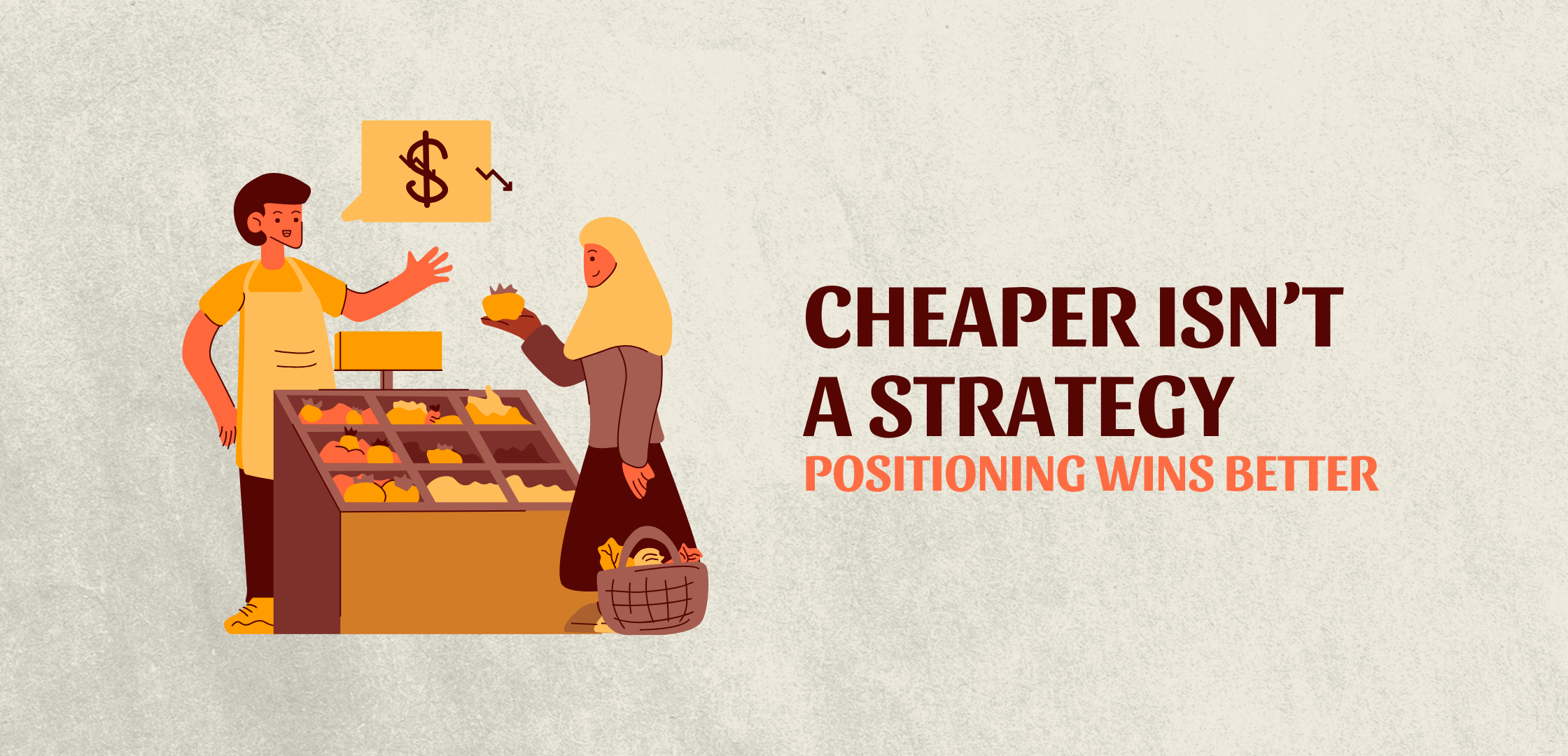
Most SG SMEs compete on price, speed, and range. These are not bad claims. They are just not differentiating ones, because every competitor is saying the same thing.
When every brand makes the same promises, price becomes the only variable a customer can act on. According toPhoenix Design's brand positioning guide, brands stuck in price-based competition see a 15% annual reduction in net profit margins. Competing on price wins customers who leave the moment someone cheaper shows up.
Singapore buyers are not simply price-driven either.UOB's 2025 ASEAN Consumer Sentiment Study found that 53% of Singaporean consumers hunt for discounts, the highest in ASEAN, yet approximately 50% plan luxury purchases within the same 12 months. When value is specific and clear, price sensitivity drops. Most SG brands lose the decision before it even begins, not because they are too expensive, but because they are too similar.
The Attention Problem Is Actually a Relevance Problem

Singapore has one of the highest social media penetration rates in the world. According toHashmeta's 2025 social media landscape report, 88.2% of the population are active social media users, averaging 7.2 platforms per month. The audience is there. What most brands misread as a reach problem is a relevance problem.
Reach without relevance does not convert. It just accumulates impressions.Digipixel's 2025 brand strategy guide notes that Singapore consumers immediately spot the difference between authentic local relevance and generic broadcast content. Scattered offers, inconsistent identity, and trend-chasing content are all symptoms of the same root issue: the brand has not decided who it is speaking to. More output will not fix that.
The Clarity Gap
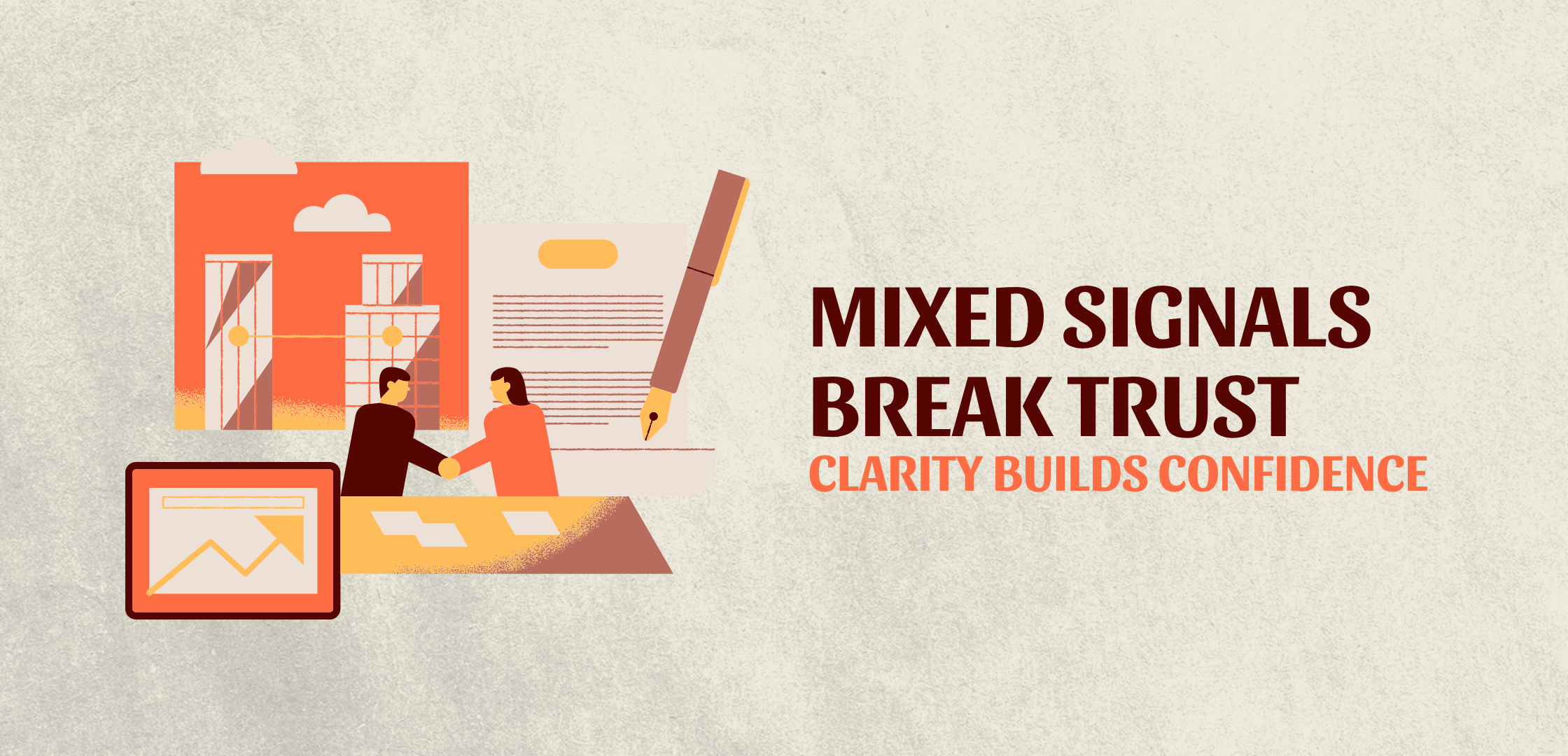
A common pattern among growing SG SMEs: the website says one thing, social says something slightly different, and the customer experience does not match either. From the customer side, this reads as a trust failure.
Appart's SME branding guide notes that inconsistent messaging erodes trust quickly, undoing even the most sophisticated campaigns. In Singapore, where buyers are digitally literate and alternatives are a scroll away, that erosion happens quietly. Someone just chose someone else.
Phoenix Design points out that when a brand's internal culture does not match its external promise, customers feel a sense of distrust without being able to name why. That is enough to lose a sale. With 82% of SG SMEs planning overseas expansion by 2026, a brand without coherent internal logic is not just losing local customers. It is structurally unprepared for what growth demands.
What Brands That Last Actually Do
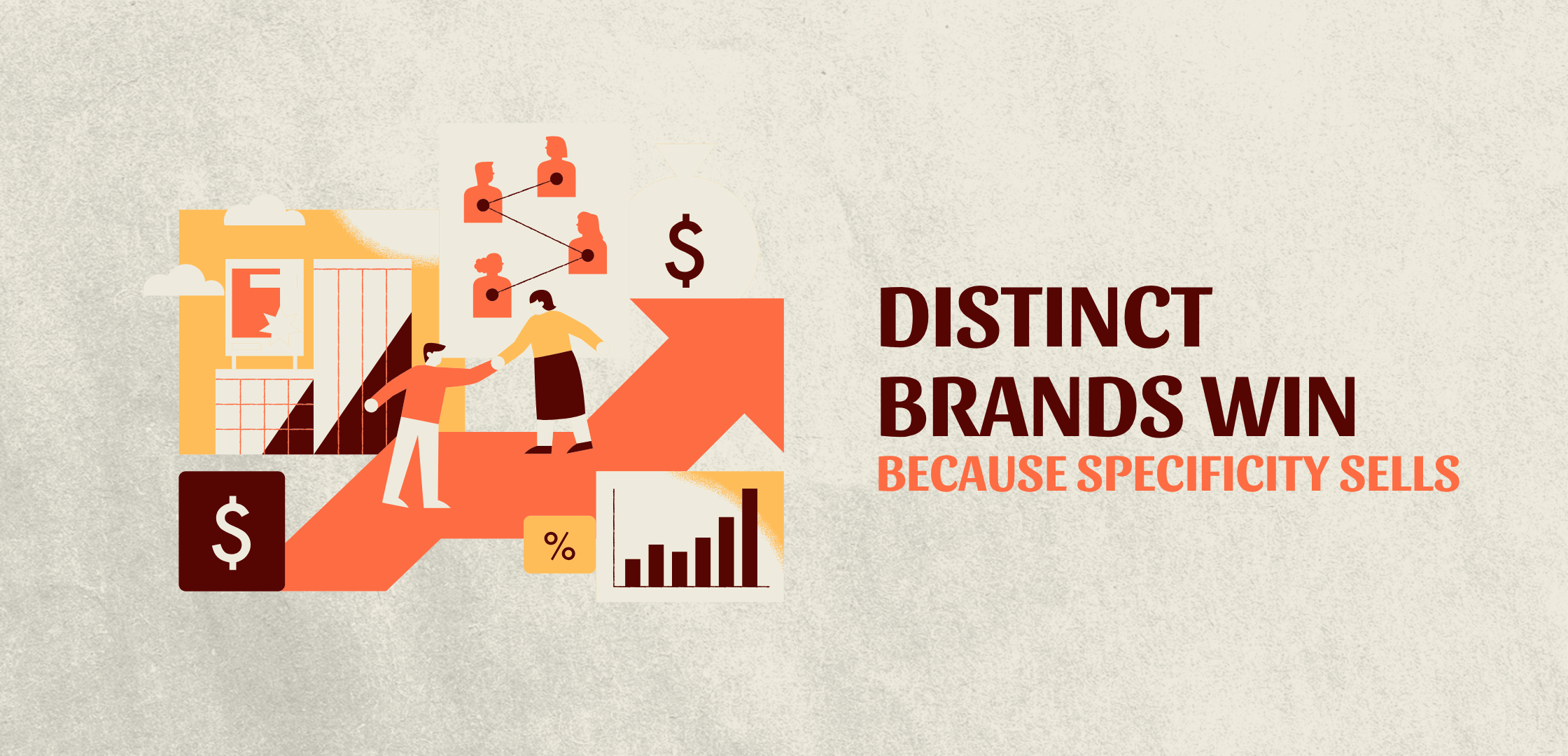
The brands that consistently win in SG are not the biggest spenders. They have made explicit decisions about who they serve, what problem they solve, and what makes them different. Everything else follows from those three answers.
Vantage Branding's positioning guide notes that Singapore ranked first globally in the 2024 IMD World Competitiveness Ranking, and that clear local positioning directly supports ASEAN expansion. A specific position built on defined values travels. Geography alone does not.
In practice, this means four things: a defined specific customer, one clear promise repeated consistently, a decision to stop competing in crowded categories, and brand strategy treated as a business decision rather than a creative one. A 2025 analysis from SUCCESS magazine found that a brand which replaced discounting with specificity saw a 33% drop in price-sensitive behaviour and a 21% improvement in margins. The change was not a lower price. It was a clearer position.
CONCLUSION

If your marketing keeps starting over, the question worth asking is not whether the tactics are right. It is whether the brand is clear enough about who it is, who it is for, and what it actually stands for.
Singapore rewards specificity. The businesses that build lasting preference here are the ones whose audience immediately understands the offer, trusts the promise, and comes back without needing to be re-acquired every time. That clarity is built before the content calendar, before the ad campaign, before the next refresh.
There is a version of your brand that does not have to compete this hard for every client. IGM helps SG businesses find and build it.
